Over the last seven months, we have been sharing our organization’s history with you. Founded in 1900, the Children’s Home Society of Virginia is one of Virginia’s oldest adoption agencies. Since then, we have served nearly 15,000 children and families.
Our mission is the same now as it was back then: to find permanent adoptive homes for children of all ages throughout the commonwealth and to provide critical support services to adoptive families and past and present adoptees.
We believe that every child deserves a home. For 120 years, we have been working toward that goal. Healthy families are the cornerstone of a healthy community. We work tirelessly to transform our community by creating and supporting families in which children thrive.
When we positively impact children’s lives, the whole community benefits.
If you have been following along since January, we have discussed every decade from the 1900s to the 1950s. This month, we are covering adoption in the 1960s and the 1970s.
During these times, our organization adapted to social change and embraced diversity. Keep reading to learn more about these great times.
Adoption in the 1960s | Supporting Social Change
During the 1960s, the Children’s Home Society of Virginia embraced social change and led the charge for inclusion and diversity.
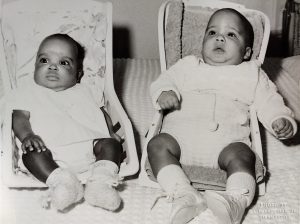 We were amongst the first statewide agencies to encourage placing children of minority and mixed-race backgrounds. Today, Federal law prohibits the delay or denial of an adoptive placement based on the race or ethnicity of a child in the US foster care—and the prospective parent or parents who are seeking to adopt them.
As we adapted, we needed to rewrite our adoption guidelines and processes so that they prioritized assessing prospective families in ways that produced the very best match for every child.
After being rewritten, our guidelines included financial consideration and pricing, individualized adoption criteria, as well as mandatory interviewing for prospective adoptive parents.
You may think that adoption is expensive. The truth is, most adoptions from US foster care are at no cost. There is also usually financial help and financial reimbursements for families who adopt.
Foster and adoptive families receive a monthly maintenance payment from social services to off-set the care of the child. Adopted youth are also eligible for an adoption subsidy that gets paid to the adoptive parents. The youth’s emotional, physical, and behavioral needs determine the amount of the allowance.
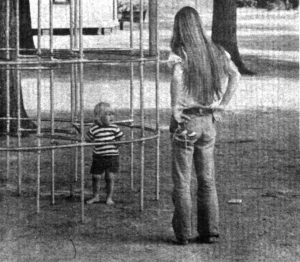 During the sixties, we also began accepting unmarried and single adoptive parents. To this day, this is still a very prominent adoption myth: You do not have to be married to adopt. You can give a child or teen a permanent loving home no matter if you’re single, married, divorced, or widowed. The ability to provide a safe, supportive, and caring home is more important than your marital status.
Adoption in the 1960s proved to be a time of reform for our organization, and this reform continued into the seventies.
Adoption in the 1970s | Embracing Diversity
In the seventies, the Children’s Home Society of Virginia continued to break through social barriers, adhering to our driving principle of finding the right family for every child.
We became the champions of more “difficult to place” children, including those who were disabled or had special needs, were older or were in sibling groups.
Another myth surrounding adoption is that foster kids are out of control and dangerous. This myth could not be further from the truth. Youth who are in foster care have, unfortunately, experienced abuse or neglect. They may then have developmental or behavioral issues. However, that does not mean that they are bad kids. They have just sadly suffered unthinkable circumstances during a time when they should have been safe.
By placing these youth in a nurturing, loving environment, foster kids can bloom into exceptional individuals. Permanency makes all the difference for their future.
To this day, 120 years later, we are still champions for placing “difficult” youth. In 2019, we finalized 45 adoptions, including older teenagers and an eight-year-old with cerebral palsy who was wheelchair-bound.
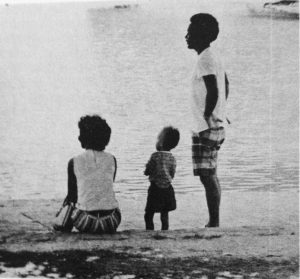 In 1971, we also launched the “Black Homes for Black Children” campaign, which included ad spots on local television and radio stations to create awareness for the need of more African American adoptive parents because of the plight of African American children in foster care.
Today, Virginia’s waiting children are:
- 54% boys
- 46% girls
- 54% Caucasian
- 33% African American
- 8% Hispanic
- 11% multi-racial
- 33% aged 13 or older
Support Virginia Adoption & Child Welfare | 120th Anniversary
The sixties and seventies were a time of significant change for our organization. But like always, we adapted to serve the needs of our community better. Stay tuned for September, where we will dive into the 1980s, a time where we strengthened our unbiased and caring counseling for mothers and parents who were experiencing unplanned pregnancies.
Creating solutions that better serve Virginia’s at-risk youth remains our foremost priority.
Virginia is ranked last, yet again, for the rate of children aging out of foster care. Currently, there are 1,000 children up for adoption in Virginia.
If you want more information on how to give a child in need a forever home, get in touch with us today: 804-353-0191
If you can give financially to our cause, we would be most grateful. Every dollar makes a difference in the life of a child, and no amount is too small.